
If your dentist or orthodontist has ever mentioned the words “tongue thrust”, you may be left with several questions. What exactly is that? Can it go away on its own? And does it need to be treated?
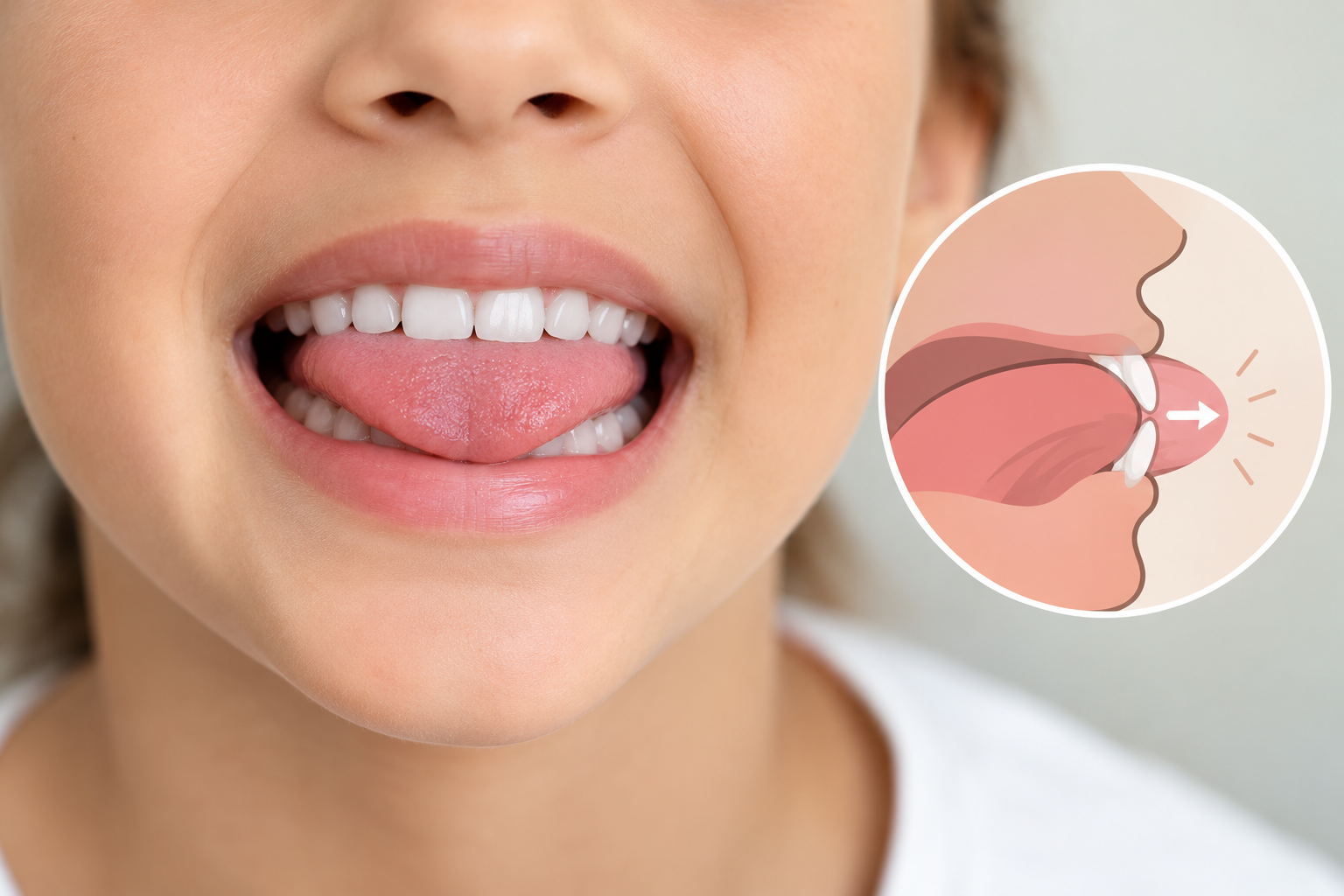
Tongue thrust is an improper swallowing pattern that occurs when the tongue pushes forward, against, or between the teeth. Depending on the individual, this pattern may affect oral function and, in some cases, contribute to dental or orthodontic concerns.
Understanding what a tongue thrust is, what may contribute to it, and how to identify the signs are important first steps toward finding the right approach to treatment.
In this blog, we’ll discuss the potential causes of tongue thrusts, common signs and symptoms, and how myofunctional therapy may be able to help.
Understanding Typical vs. Atypical Swallows
To understand what makes a swallow atypical, it helps to first understand what a typical swallowing pattern looks like.
During a typical swallow, your tongue, lips, cheeks, and jaw all work together to coordinate the movement of food and liquid. The tongue tip rests behind the top teeth, while the back of the tongue lifts toward the roof of the mouth to propel food or liquid toward your throat for swallowing.
With a tongue thrust, sometimes called a reverse or immature swallow pattern, the tongue pushes either forward or sideways against the teeth in order to propel food and water back toward the throat.
So Why does it Matter?
You might be wondering why this matters. Well, we swallow hundreds of times throughout the day, often without even realizing it. When an atypical swallowing pattern becomes a habit, the tongue may repeatedly put pressure against the teeth. Over time, this pressure could lead to issues with dental alignment such as an open bite, and it could even contribute to orthodontic relapse.
A tongue thrust might also be associated with certain speech sound errors. For example, can your child produce a perfect “s” sound when you ask them to, but struggle to use it correctly in everyday conversation? An atypical tongue posture or movement pattern may be a factor worth exploring.
What causes a tongue thrust?
While there is not one specific cause that leads to a tongue thrust, there are some habits or characteristics that might make a person more likely to thrust:
Mouth breathing
Individuals who breathe through their mouth often rest their tongue at the bottom of their mouth rather than lightly suctioned against their palate. This can be associated with changes in swallowing patterns.
Prolonged pacifier use or thumb sucking
Oral habits such as pacifier use or thumb sucking can have a strong influence on the shape, growth, and development of the palate. These oral changes may contribute to poor tongue posture or swallowing patterns.
Poor tongue mobility (tongue-tie)
A tongue-tie occurs when the string of tissue connecting the bottom of your tongue to the floor of the mouth restricts the tongue’s movement. Some people with tongue-ties might have a hard time achieving appropriate tongue positioning during the swallow.
Upper airway obstruction
Enlarged tonsils, adenoids, turbinates, or chronic congestion can often lead to an improper swallow.
Persistent oral muscle patterns
Sometimes, an atypical swallowing pattern persists even after the factors that contributed to it have changed. The pattern may become a habit that requires targeted practice to remediate.
What are the Signs of a Tongue Thrust?
So how do I know if I have a tongue thrust? A tongue thrust is tricky to identify on your own. However, there are several signs that might indicate it’s worth seeking out a professional evaluation. These signs may include:
The tongue pushes against or between the teeth during swallowing
The tongue rests between the teeth or in a forward position
You have an open bite
Your teeth shift after removing braces or clear aligners
Certain speech sounds are difficult to produce (e.g., s and z)
It is important to keep in mind that these signs don’t automatically mean someone has a tongue thrust. A professional evaluation can help you determine the root cause.
How Can Myofunctional Therapy Help?
If you have a tongue thrust, myofunctional therapy can help improve your coordination and function of the muscles involved in tongue posture and swallowing. Through targeted exercises and guided practice, you can work toward developing healthier oral habits. At Rooted, each treatment plan is individualized to support your unique needs and goals.

Ready to Take the Next Step?
Whether you’re a parent worried about your child’s oral development or an adult who has been told they have a tongue thrust by your dentist, an evaluation can help you better understand your current oral function and determine if myofunctional therapy is a good fit for you.
At Rooted Speech and Myo, we help individuals and families identify the root cause of their symptoms and help create a treatment plan so you can achieve functional tongue resting posture, swallowing habits, and optimal oral function.
If this resonates with you, here to schedule a myofunctional evaluation today!