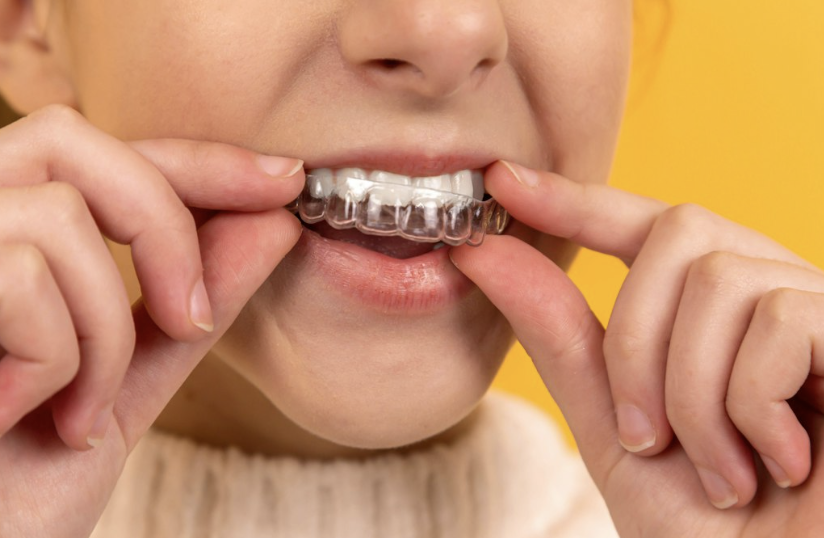
The day has finally come, you’re getting your braces off! Your teeth are straight, your bite has been corrected, and you are ready to show off your new smile! You may find yourself leaving the orthodontist with a new retainer and a simple set of instructions to wear this retainer consistently for the foreseeable future.
Some people are great about wearing their retainer, while others may be a little more forgetful. But months, or even years later, you may notice that your teeth have started to shift.
You might be thinking, Well, this only happened because I wasn’t wearing my retainer consistently, but that isn’t entirely true. While inconsistent retainer wear can certainly contribute to tooth movement, it isn’t always the whole story. Even people who wear their retainers consistently may notice changes over time.
This is because there may be other factors impacting your teeth beyond just wearing your retainer. The tongue, lips, and cheeks all have muscles that surround the teeth, and the way they rest and function through the day and night may place pressure on the teeth over time
What is Orthodontic Relapse?
Orthodontic relapse occurs when the teeth begin moving away from their corrected positions after orthodontic treatment, such as braces or clear aligners.
There are many factors that can contribute to this relapse, and your orthodontist is the professional who is equipped to evaluate tooth movement and whether additional orthodontic treatment may be warranted. However, when patterns such as a tongue thrust, or difficulty maintaining appropriate oral resting posture are present, myofunctional therapy may be an important piece of the puzzle.
A myofunctional therapist cannot correct the position of the teeth, instead, we evaluate how the muscles of the mouth are functioning and whether certain patterns may be placing unwanted pressure on the teeth.
Two areas that may play a role in orthodontic relapse include:
The Tongue and Oral Resting Posture
During a myofunctional therapy evaluation, we will look at where the tongue rests, can the lips comfortably close at rest, does the tongue sit low or forward in the mouth, and if nasal breathing is consistent.
Ideally the tongue rests gently against the roof of the mouth without pushing against the teeth. When the tongue consistently rests low or forward, it may place pressure on the teeth. Resting posture is very important because this tongue positioning is present for many hours during the day and night.
Now, this does not mean that tongue posture necessarily is the sole reason your teeth have shifted. Orthodontic relapse can have many different causes, however, oral resting posture is one pattern worth evaluating as part of the bigger picture.
Tongue Thrust and Swallowing Patterns
In a mature swallowing pattern, we expect the tongue to function without excessive pressure onto the front or sides of the teeth. However, some people continue to push the tongue forward or out to the sides while swallowing. This is commonly referred to as a tongue thrust swallow.
Sometimes a patient may return to their orthodontist because their teeth have shifted and they are considering braces or clear aligners again. During the evaluation, the orthodontist may notice signs of a tongue thrust and recommend a myofunctional evaluation to address the underlying swallowing problem. This is because the tongue can place repeated pressure on the teeth during an improper swallowing pattern. If the tongue thrust is not addressed, these forces may continue even after the teeth are moved back into their corrected positions, potentially contributing to orthodontic relapse over time.
When you come to myofunctional therapy, our goal is not to move the teeth or correct the bite. That is your orthodontist’s job! Our focus is on the function and helping establish more appropriate patterns for tongue posture, swallowing, lip closure, breathing, and more.
Ideally, orthodontics and myofunctional therapy work together. Where, the orthodontist addresses the structure and position of the teeth, and the myofunctional therapist addresses the function.
Myofunctional Therapy Does Not Replace Orthodontic Treatment
This is a very important distinction. Myofunctional therapy is not a replacement for orthodontic treatment. Your orthodontist is the professional equipped to manage tooth movement, your bite, retainers, expanders, braces, clear aligners, and other orthodontic appliances.
A myofunctional therapist will focus on function, particularly how the tongue, lips, breathing, and swallowing patterns are working with that structure.
Do I Need Myofunctional Therapy After Braces?
Not necessarily! Having braces or clear aligners does not automatically mean that you need myofunctional therapy.
However, an evaluation may be worth considering if your orthodontist, dentist, or another provider has noticed a tongue thrust, low or forward tongue posture, mouth breathing, difficulty maintaining lip closure, or another oral habit.
It can also be helpful if you have experienced orthodontic relapse in the past and your provider has questions about whether oral habits/patterns could be contributing.
Looking at the Bigger Picture
At Rooted Speech and Myo, we look beyond the teeth and pay close attention to how the muscles of the mouth are resting and functioning.
If you or your child has a history of orthodontic treatment and you have questions about tongue posture, swallowing, breathing, or oral habits, a myofunctional evaluation may be indicated. During this evaluation, we can determine whether any oral habits or patterns may be contributing to unwanted pressure on the teeth. If concerns are identified, myofunctional therapy can help address these areas and promote appropriate mouth resting posture and swallowing function to support long-term orthodontic stability.
Our goal is not to replace your orthodontist or promise that therapy will prevent your teeth from ever moving. Instead, we work alongside your dental and medical providers to help address the functional patterns that may be part of a bigger picture.
Ready to get started? Schedule a myofunctional evaluation with one of our speech therapists today!