
Why Do I Have Jaw Pain (And What Can I Do About It?)
Jaw pain affects millions of people and often develops gradually over time. Many people experience discomfort for months or even years because they are unsure of what is causing their pain or the best way to treat it.

In this blog post, I will answer frequently asked questions about jaw pain, including the common causes, symptoms, and treatment options, to help you move forward with greater confidence and direction.
1. Why is it even called TMJ?
Many people refer to their jaw pain as “TMJ,” but TMJ is actually just the name of the temporomandibular joint. Everyone has this joint on either side of their jaw. The correct term for dysfunction in this area is temporomandibular disorders (TMD), an umbrella term for a group of conditions affecting the jaw joints and surrounding muscles.
There are two main types of TMD:
Muscular TMD: when pain and tension come from the jaw muscles
Structural TMD: when the jaw joint itself is not functioning properly
A thorough evaluation from a healthcare provider can determine whether your symptoms are primarily muscular, structural, or a combination of both.
2. What are the common causes?
Jaw pain often develops due to a combination of contributing factors rather than a single cause.
Common contributors include:
Muscle tension or overuse
Teeth clenching or grinding
Sleep/breathing dysfunction
Bite-related factors
Oral habits that place strain on the jaw
Trauma or injury
Changes within the jaw joint (such as disc displacement or arthritis)
Because every person is different, identifying the contributing factors is an important step toward effective treatment.
3. What are some symptoms people experience along with jaw pain?
Common associated symptoms include facial pain, jaw clicking or popping, headaches, neck pain, ear pain or fullness, jaw locking, and limited jaw opening.
4. When should I seek treatment?
The sooner, the better! Early intervention can help prevent symptoms from becoming more chronic or complex. If your jaw pain is interfering with daily activities such as chewing, speaking, or opening your mouth, it is a good idea to seek a professional evaluation.
5. Who is involved in treatment?
There are a wide range of treatment options for jaw pain, and providers often have differing perspectives on the most appropriate course of care. In my experience, the most successful treatment outcomes are often achieved through a multidisciplinary approach, with several providers collaborating to evaluate and manage the disorder.
Examples of providers who may be involved include dentists, orthodontists, physical therapists, ENTs, myofunctional therapists, chiropractors, oral and maxillofacial surgeons, licensed massage therapists, and sleep medicine physicians.
With so many options, it can be difficult to know where to start. A myofunctional therapist can typically help identify functional patterns that may be contributing to your symptoms and guide referrals.
6. What is a myofunctional therapist?
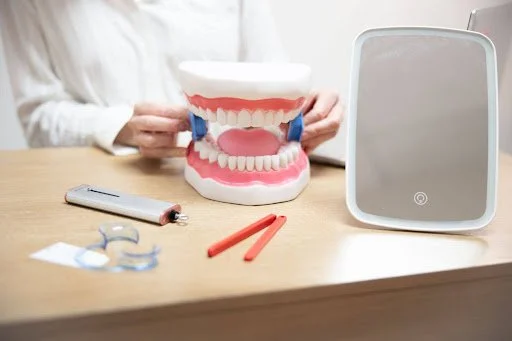
A myofunctional therapist specializes in evaluating and treating the muscles and habits of the face, mouth, and jaw. Myofunctional therapy is often described as “physical therapy for the mouth” because it focuses on improving the function of the oral and facial muscles.
7. How does myofunctional therapy help patients with jaw pain?
Myofunctional therapy focuses on eliminating habits that can add extra strain to the jaw. Some examples of these include:
Mouth breathing
Incorrect tongue and jaw resting posture
Teeth grinding and clenching
Inefficient swallow patterns
Noxious oral habits (e.g., nail-biting)
Compensatory chewing patterns
Poor body posture
Dysfunctional breathing patterns
By reducing these habits, patients often experience reduced strain on the jaw and therefore, lower pain levels.
8. What about Botox and nightguards?
A nightguard and Botox are considered tools for managing symptoms. However, they do not address the underlying causes of the dysfunction. Once the Botox wears off or the nightguard is removed, symptoms often return. The best outcomes typically occur when the symptoms are managed and the underlying causes are addressed.
9. What can I do at home?
There are several strategies that may help reduce discomfort and prevent your symptoms from worsening while you are waiting on a professional evaluation.
First, become aware of your mouth resting posture throughout the day. Your lips should be closed, your teeth should be slightly apart, and your tongue should be resting on the roof of your mouth. Many of my patients quickly realize they are unintentionally clenching their teeth throughout the day, especially when concentrating.
Choose softer foods during flare-ups. For example, you may want to switch out tougher or crunchy foods like steak or toast for softer options like ground beef, yogurt, scrambled eggs, or soft bread.
Limit gum chewing, nail biting, and chewing on pens or ice. These habits place extra strain on the jaw.
Apply a warm compress to the jaw muscles for 10-15 minutes to help reduce tension and improve comfort.
Avoid intentionally “testing” your jaw by opening wide or checking for clicking and popping. This can aggravate your jaw even more.
10. What are my next steps?
Jaw pain is complex, but it is often very treatable when the root causes are properly diagnosed and addressed. A comprehensive evaluation can help identify what may be causing your specific symptoms and guide you toward the most effective treatment plan.
If you’re ready to move forward, click here to schedule an evaluation with a myofunctional therapist and begin your treatment journey.